

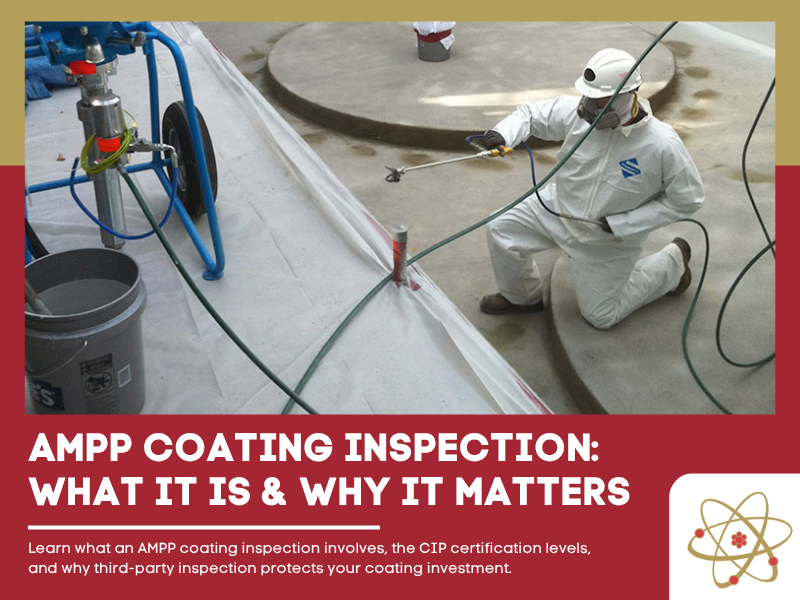
Protective coatings are one of the most cost-effective defenses a facility has against corrosion, yet they are also one of the easiest things to get wrong. A coating that looks fine on the surface can still fail early if it was applied over poorly prepared steel, at the wrong thickness, or under the wrong environmental conditions. An AMPP coating inspection exists to catch those problems before they turn into unplanned downtime, warranty disputes, or premature asset failure.
Schedule Industrial Coating Services
What Is AMPP?
AMPP, the Association for Materials Protection and Performance, is the organization formed by the merger of NACE International and SSPC: The Society for Protective Coatings, the two bodies that historically wrote the standards and ran the certification programs the protective coatings industry relies on. AMPP now maintains and develops the surface preparation, coating application, and inspection standards that specifications across oil and gas, power generation, marine, water/wastewater, and industrial facilities are written around.
What Is an AMPP Coating Inspector?
An AMPP Coating Inspector is a professional certified through AMPP’s Coating Inspector Program (CIP), the credential that combined the legacy NACE CIP and SSPC PCI programs into a single, globally recognized certification path. The program has three levels, and each one adds responsibility and technical depth:
| Level | Certification | What It Covers |
| Level 1 | Basic Coatings Inspector | Fundamentals of surface preparation, basic inspection instruments, and non-destructive testing techniques |
| Level 2 | Certified Coatings Inspector | Advanced inspection techniques, coating failure analysis, and specification interpretation |
| Level 3 | Senior Certified Coatings Inspector | Audit-level competency, complex project oversight, and quality assurance program management |
A certified inspector isn’t just checking a box at the end of a job. They’re independently verifying, at defined points throughout the project, that surface preparation and coating application meet the specification the client and the coating manufacturer agreed to.
Schedule Industrial Coating Services
What Happens During an AMPP Coating Inspection
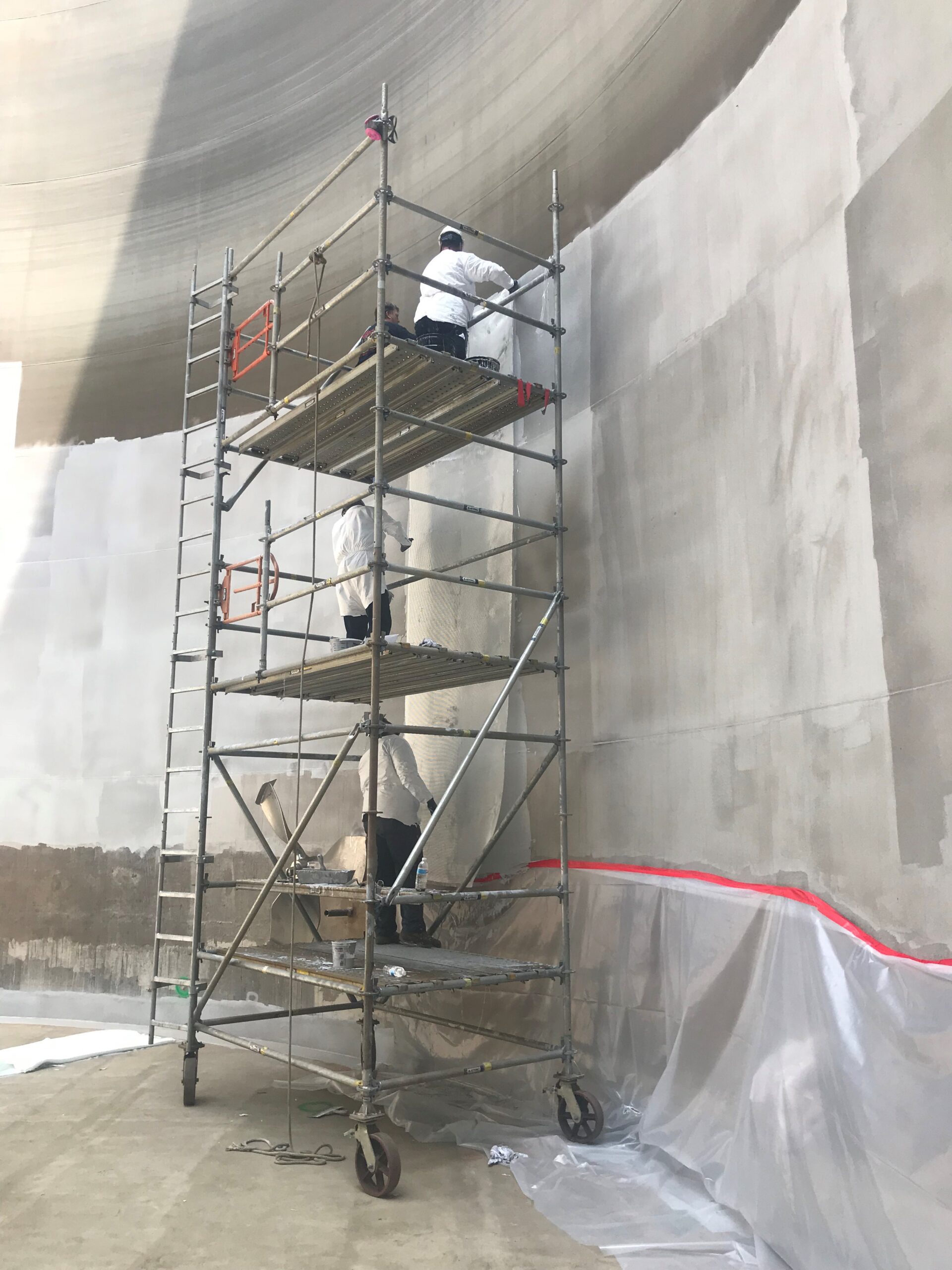
A thorough coating inspection follows the coating process from bare metal to final cure, with documented checks at each stage:
Surface preparation verification
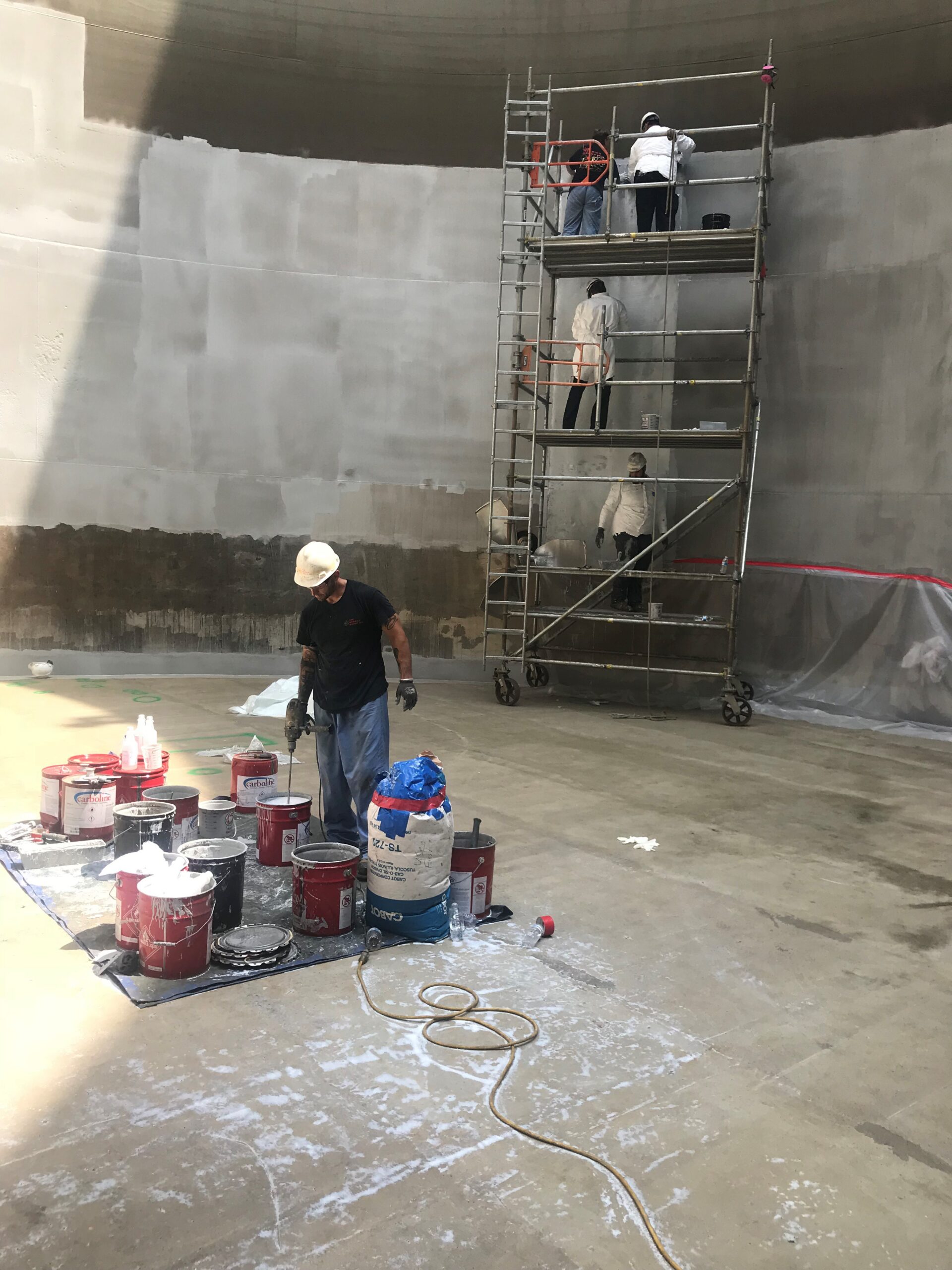
Confirming the steel has been cleaned and profiled to the specified SSPC/NACE surface preparation standard (for example, SSPC-SP 10/NACE No. 2 Near-White Metal Blast Cleaning), since coatings applied over an improperly prepared surface are one of the leading causes of early failure.
Environmental monitoring
Tracking ambient and substrate temperature, relative humidity, and dew point to confirm conditions stay within the coating manufacturer’s application window.
Wet and dry film thickness measurement
Verifying the coating is applied within spec using calibrated gauges, in accordance with standards such as ASTM D7091 and SSPC-PA 2, which govern how nondestructive dry film thickness measurements are taken and evaluated.
Holiday and discontinuity testing
Using low- or high-voltage detection to find pinholes and thin spots in the coating film, following methods such as NACE SP0188 for holiday testing.
Adhesion testing
Confirming the coating is properly bonded to the substrate and to any underlying coats.
Documentation
Producing a traceable inspection record that supports warranty claims, asset integrity files, and regulatory or client audits.
In Summary
A coating inspection isn’t a final walkthrough. It’s a series of checkpoints built into the job, because a defect caught during surface prep costs far less to fix than one discovered after the coating has cured — or after the asset is back in service.
Why AMPP Coating Inspection Matters
Coatings protect steel structures, tanks, piping, and equipment that are expensive to replace and, in many cases, difficult or impossible to take offline on short notice. A coating failure doesn’t just mean a cosmetic issue — it means exposed steel, accelerated corrosion, and in industrial settings, a maintenance event that could have been avoided.
An independent, AMPP-certified inspection gives facility owners and asset managers a few things that in-house visual checks can’t:
- Objective, third-party verification that work matches the written specification — not just the contractor’s judgment.
- Warranty protection, since most coating manufacturers require documented proof that application followed their specified process.
- Fewer repeat mobilizations, because defects are caught and corrected during the job rather than after the crew and equipment have demobilized.
- A defensible paper trail for regulatory reviews, insurance requirements, and long-term asset integrity records.
For facilities operating in power generation, oil and gas, water treatment, and other heavy industrial environments, that documentation often becomes part of the asset’s permanent maintenance history — evidence that protective systems were installed correctly the first time.
Working With an AMPP-Certified Inspector
Not every coating job requires a Level 3 inspector, but any coating project protecting critical infrastructure benefits from having a certified inspector involved from surface preparation through final cure — not just at the end. Bringing in AMPP-certified inspection as part of the coating scope, rather than as an afterthought, is what keeps a protective coating system performing for its full design life instead of failing years ahead of schedule.
The Merrick Group’s AMPP Certified Coating Inspectors support industrial and power generation facilities with inspection services built around these standards, alongside our broader industrial coating services. Contact us to talk through inspection requirements for your next coating project.
Schedule Industrial Coating Services